
Cholesterol Is Only One Part of Your Heart Health

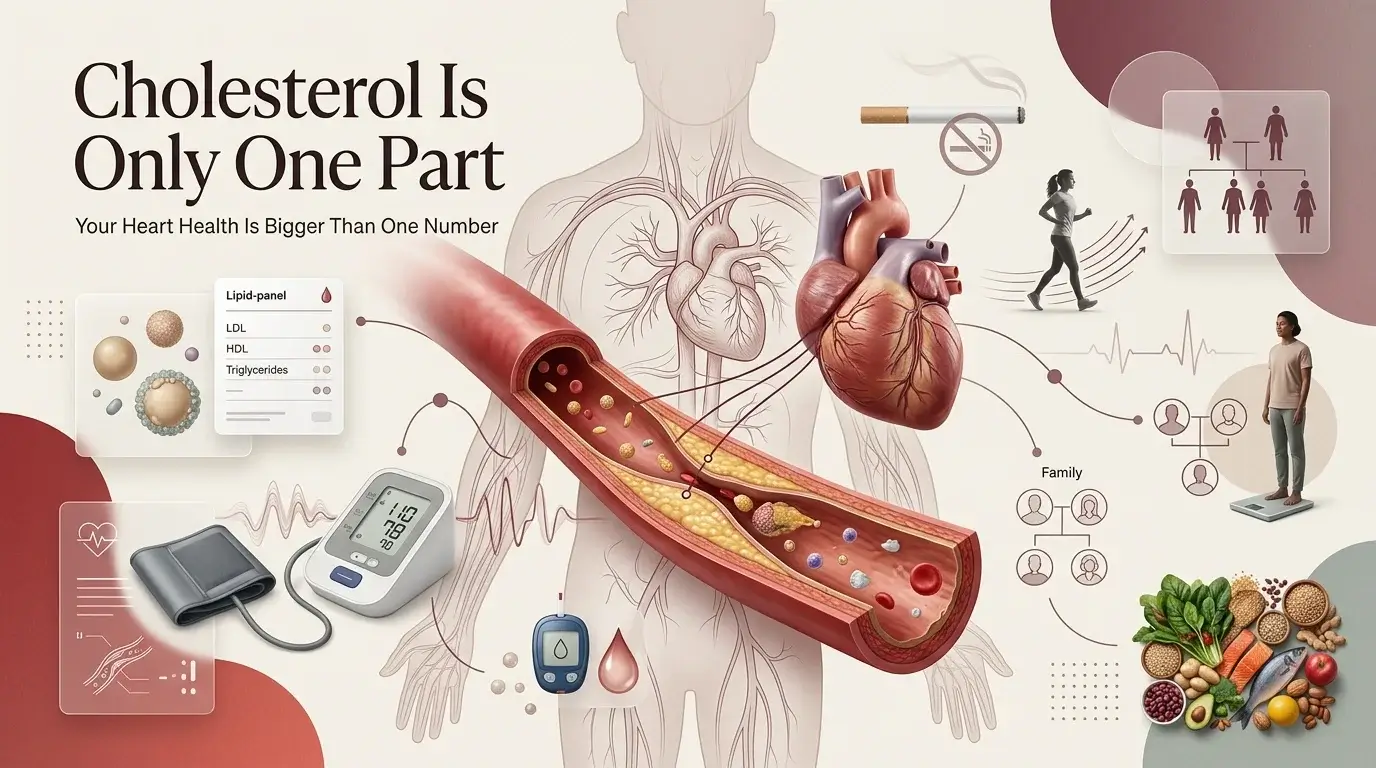
We often talk about cholesterol as though it is the entire story behind heart disease. But cardiovascular health is more complicated than one number on a blood test.
Atherosclerosis, the buildup of plaque inside the arteries, develops gradually. Cholesterol-containing particles are an important part of that process, but blood pressure, diabetes, smoking, excess weight, physical inactivity, and other factors also contribute to cardiovascular risk.
That is why your lipid report matters, but it should not be viewed in isolation.
What Happens Inside Your Arteries?
Your arteries are living tissues, not simply pipes carrying blood around your body.
Over time, factors such as high blood pressure, smoking, high blood glucose, and unhealthy cholesterol levels can contribute to damage and changes within the artery wall. The body responds to these changes, and cholesterol-containing particles, inflammatory cells, calcium, and other substances can accumulate to form plaque.
This process usually happens slowly and may cause no obvious symptoms for years.
Cholesterol Does Matter
There is an important distinction here: cholesterol should not be treated as harmless.
LDL cholesterol contributes to plaque formation in the arteries and is associated with a higher risk of heart attack and stroke. Current cardiovascular guidelines continue to recommend managing LDL cholesterol as an important part of reducing atherosclerotic cardiovascular disease risk.
So the goal is not to ignore cholesterol. It is to understand it in the context of your overall cardiovascular health.
Blood Sugar and Blood Pressure Matter Too
Metabolic health can have a major effect on cardiovascular risk.
Persistently elevated blood glucose and insulin resistance are associated with changes in blood vessels and an increased risk of atherosclerosis. High blood pressure can also place ongoing stress on artery walls and is one of the major modifiable risk factors for cardiovascular disease.
This is why looking at cholesterol while ignoring blood pressure, blood sugar, smoking, physical activity, weight, and family history can give you an incomplete picture.
A Normal Cholesterol Number Does Not Tell You Everything
A lipid panel usually includes measurements such as LDL cholesterol, HDL cholesterol, and triglycerides. These numbers are useful, but cardiovascular risk can involve additional factors.
The 2026 ACC/AHA dyslipidemia guideline recognizes other markers and factors that can help refine risk assessment, including lipoprotein(a), apolipoprotein B, diabetes, chronic kidney disease, family history, and coronary artery calcium in appropriate patients.
This is one reason your healthcare professional may look beyond your standard cholesterol report when assessing your heart health.
What About Cholesterol Medication?
Cholesterol-lowering medication does not mean the other areas of your health no longer matter.
For people who need it, LDL-lowering treatment can reduce cardiovascular risk. At the same time, managing blood pressure, blood glucose, tobacco exposure, physical activity, nutrition, sleep, and weight can address other important risk factors.
Taking a statin or another prescribed medication should therefore not be seen as replacing healthy habits. And medication should never be stopped simply because you are working on lifestyle changes.
Your Arteries Tell a Bigger Story
Your cholesterol report gives you valuable information, but it is one piece of a much larger picture.
Instead of asking only, “Is my cholesterol high or low?” it can be more useful to ask about your overall cardiovascular risk. How is your blood pressure? What are your blood glucose levels? Do you smoke? Are you physically active? Do you have a family history of early heart disease? Are there other risk factors your healthcare professional needs to consider?
Heart health is not built around one laboratory result. It is shaped by many factors over many years.
Taking care of those factors early gives you more opportunities to protect your arteries and reduce your long-term cardiovascular risk.
Medical Disclaimer
This article is for general health education and is not medical advice. Cholesterol and cardiovascular risk should be assessed based on your individual health history, laboratory results, age, family history, and other risk factors. Do not start, stop, or change cholesterol or blood pressure medication without speaking with your healthcare professional.
References
- Blumenthal RS, Morris PB, Gaudino M, et al. 2026 ACC/AHA/AACVPR/ABC/ACPM/ADA/AGS/APhA/ASPC/NLA/PCNA Guideline on the Management of Dyslipidemia. Circulation. 2026. doi:10.1161/CIR.0000000000001423.
- American Heart Association. What Is Atherosclerosis? Updated March 13, 2026.
- American Heart Association. HDL (Good), LDL (Bad) Cholesterol and Triglycerides. Updated March 13, 2026.
- American Heart Association. Inflammation and Heart Disease.
- American Heart Association. 2025 High Blood Pressure Guideline.