
12 Most Expensive Medical Procedures and Treatments in USA


Medical treatment can become extremely expensive when it involves organ transplantation, major surgery, intensive care, or long-term specialist management. Some of the highest-cost procedures are complex transplant operations that require highly specialized surgical teams, donor-organ coordination, intensive care, and lifelong follow-up.
The costs below are approximate United States. medical cost estimates and should be viewed as general ranges rather than fixed prices. Actual charges can vary widely depending on the hospital, location, patient’s condition, complications, insurance coverage, and length of hospital stay.
12 more details Below
1. Intestinal Transplant
Average Cost: $1.1 million to $1.2 million
An intestinal, or small-bowel, transplant replaces a severely damaged or failing small intestine with a donor organ. It may be considered for people who cannot receive adequate nutrition through their digestive system because of severe intestinal disease or intestinal failure.
Why Is an Intestinal Transplant So Expensive?
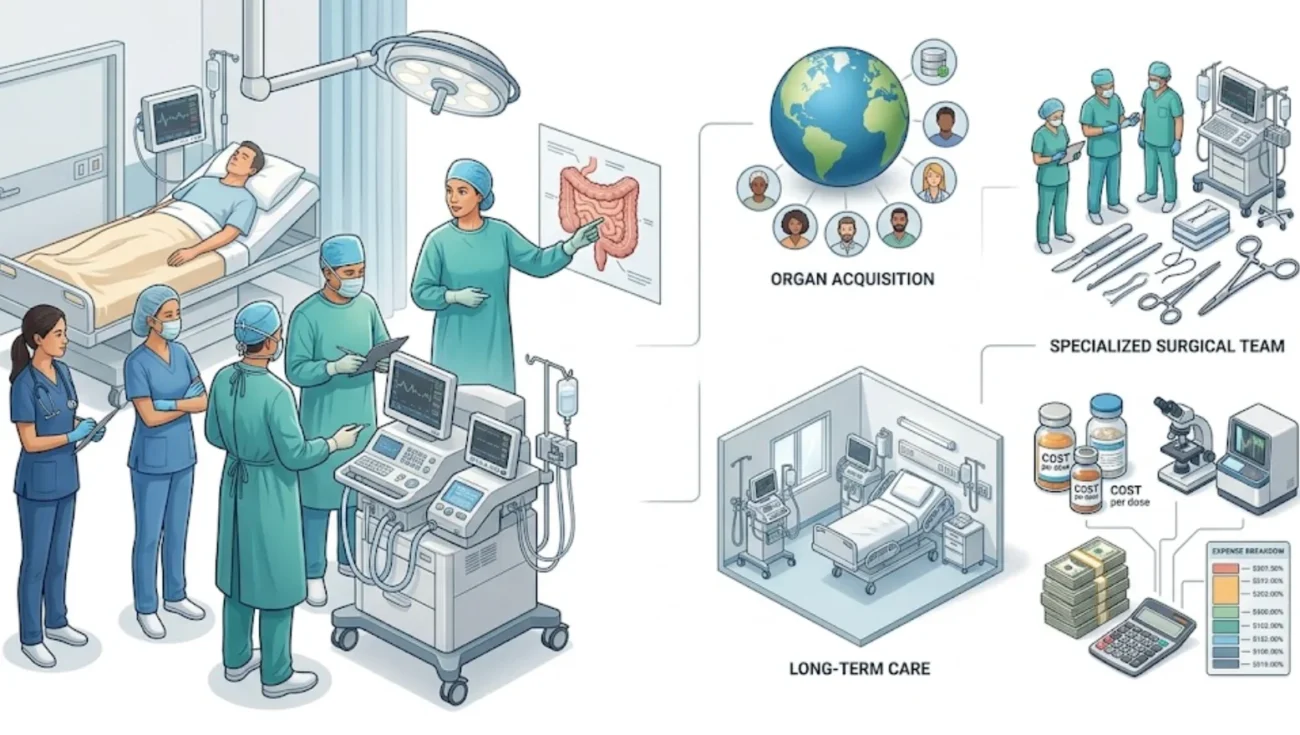
The small intestine contains a large amount of immune tissue and naturally contains many microorganisms, which makes rejection and infection important concerns after transplantation. The procedure requires highly specialized transplant surgeons, intensive monitoring, donor-organ coordination, and prolonged hospital care.
In some cases, an intestinal transplant is performed together with another organ transplant, such as a liver transplant, which can substantially increase the overall cost.
2. Heart-Lung Transplant
Average Cost: $1.1 million to $1.15 million
A heart-lung transplant replaces both the patient’s heart and lungs with organs from a donor. It is reserved for people with severe disease affecting both the heart and lungs when other treatment options are no longer sufficient.
Why Is a Heart-Lung Transplant So Expensive?
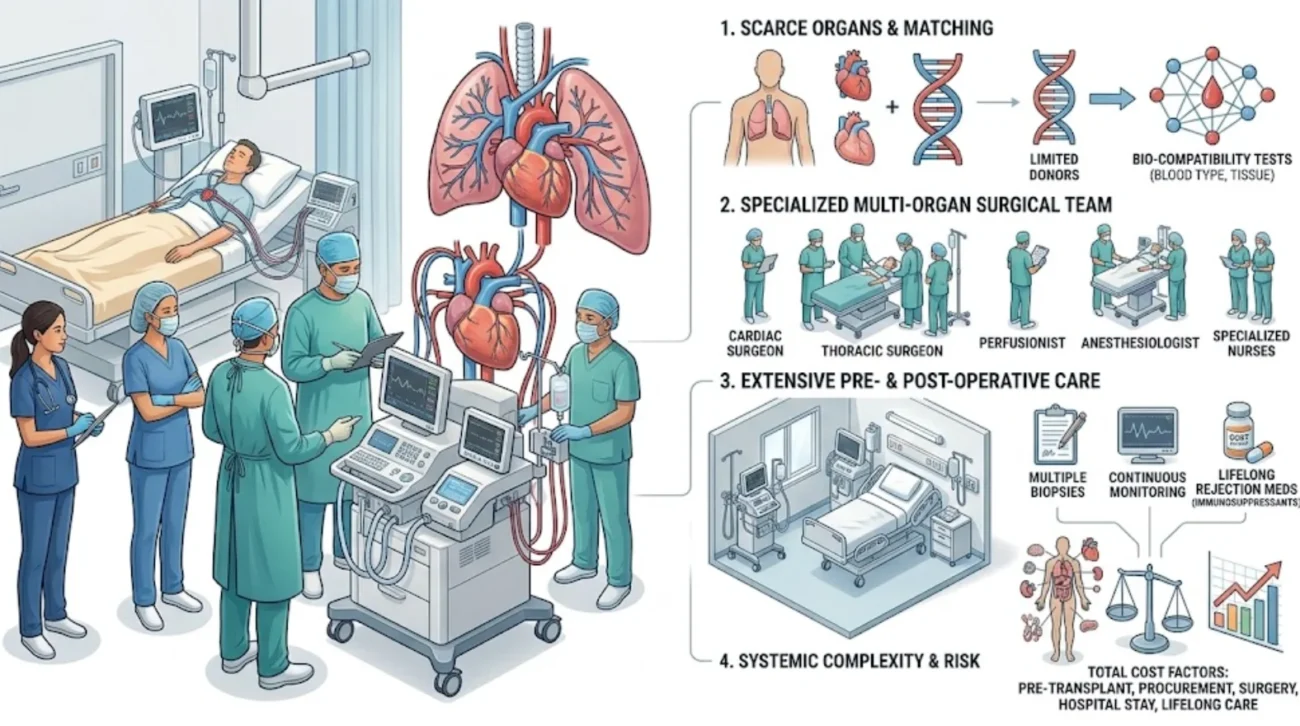
This is one of the most complex forms of transplantation. The operation requires advanced cardiothoracic surgical expertise, specialized equipment, extensive pre-transplant evaluation, and intensive postoperative monitoring.
Patients also need close surveillance for organ rejection and infection after surgery. The combination of two transplanted organs adds further complexity to an already demanding procedure.
3. Heart Transplant
Average Cost: $1.3 million to $1.6 million
A heart transplant replaces a failing heart with a healthy donor heart. It is generally considered for patients with advanced heart failure when other treatments can no longer provide adequate heart function.
Why Is a Heart Transplant So Expensive?
The expense involves much more than the transplant operation itself. Patients may require extensive evaluation before surgery, donor-organ transportation, cardiac intensive care, mechanical circulatory support, and prolonged hospitalization.
Some critically ill patients may need temporary or long-term mechanical support while waiting for a donor heart. After transplantation, lifelong immunosuppressive treatment and regular medical monitoring are also required.
4. Liver Transplant
Average Cost: $800,000 to $1.1 million
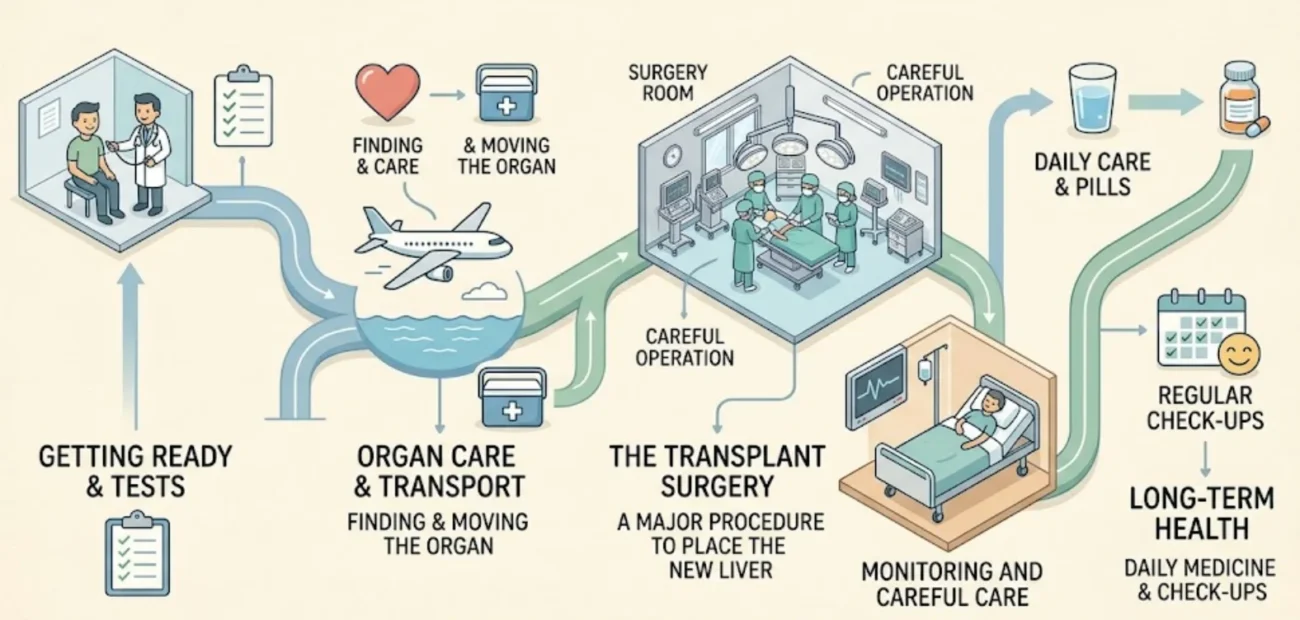
A liver transplant replaces a severely damaged liver with a healthy donor liver. It can be used to treat certain cases of end-stage liver disease, acute liver failure, and other serious liver conditions.
Why Is a Liver Transplant So Expensive?
Liver transplantation involves a large multidisciplinary team that may include transplant surgeons, hepatologists, anesthesiologists, critical-care specialists, nurses, pharmacists, and other healthcare professionals.
Patients can also experience complications involving bleeding, infection, blood clotting, fluid balance, and other organ systems. These risks can require extended intensive care and hospital treatment.
5. Allogeneic Bone Marrow Transplant
Average Cost: $700,000 to $950,000
An allogeneic bone marrow or hematopoietic stem cell transplant uses blood-forming stem cells from a donor. It is used to treat certain serious blood cancers and blood or immune-system disorders.
Why Is an Allogeneic Bone Marrow Transplant So Expensive?
Before receiving donor cells, patients often undergo conditioning treatment with high-dose chemotherapy, radiation, or both. This reduces or destroys existing bone marrow and suppresses the immune system so the donor cells can establish themselves.
After transplantation, patients are at high risk of serious infections and other complications. One major concern is graft-versus-host disease (GVHD), in which donor immune cells attack the recipient’s tissues.
The need for specialized transplant units, infection prevention, frequent testing, medications, and long-term follow-up contributes significantly to the overall cost.
6. Double Lung Transplant
Average Cost: $850,000 to $930,000
A double lung transplant replaces both lungs with donor lungs. It may be considered for people with advanced lung disease, including certain cases of cystic fibrosis, pulmonary fibrosis, severe COPD, and other forms of end-stage respiratory disease.
Why Is a Double Lung Transplant So Expensive?
The surgery requires complex work on the airways and blood vessels connecting the donor lungs to the recipient. Patients may need mechanical ventilation, intensive care, and close monitoring following surgery.
Recovery can also involve pulmonary rehabilitation, medication management, infection prevention, and regular testing to monitor lung function and detect rejection.
7. Pancreas Transplant
Average Cost: $400,000 to $600,000
A pancreas transplant replaces a damaged pancreas with a donor pancreas. It is most commonly considered for selected people with severe diabetes, particularly when serious complications have developed.
Why Is a Pancreas Transplant So Expensive?
The transplanted pancreas must be carefully connected to the recipient’s blood vessels and digestive system. Surgeons and transplant teams must also monitor for complications such as bleeding, infection, blood-vessel problems, and leakage involving digestive enzymes.
Because recipients require lifelong immunosuppressive medicines and follow-up care, the financial commitment extends well beyond the initial operation.
8. Kidney Transplant
Average Cost: $440,000 to $500,000
A kidney transplant replaces a failing kidney with a healthy donor kidney. It is one of the most commonly performed major organ transplants.
Why Is a Kidney Transplant So Expensive?
The process includes extensive evaluation before surgery, laboratory testing, donor-recipient compatibility assessment, surgery, hospitalization, and postoperative monitoring.
Although the initial transplant can be expensive, transplantation may reduce or eliminate the need for ongoing dialysis for eligible patients. Recipients still require lifelong monitoring and immunosuppressive medication to help prevent rejection.
9. Exploratory Chest Surgery or Thoracotomy

Average Cost: $137,000 to $160,000
A thoracotomy is a surgical procedure in which an incision is made through the chest wall to provide access to structures inside the chest. Depending on the situation, it may be used to diagnose or treat serious conditions involving the lungs, heart, blood vessels, or other structures.
Why Is Thoracotomy So Expensive?
Thoracotomy is a major operation that requires general anesthesia and specialized surgical care. In emergency situations, it may be performed for severe trauma, internal bleeding, or other life-threatening problems.
After surgery, patients may require chest tubes, respiratory support, pain management, intensive monitoring, and treatment for complications such as infection or breathing problems.
10. Aortic Valve Replacement
Average Cost: $135,000 to $170,000
Aortic valve replacement is used to replace a damaged or severely diseased aortic valve. Depending on the patient’s condition and anatomy, treatment may involve open-heart surgery or a less invasive approach such as transcatheter aortic valve replacement (TAVR).
Why Is Aortic Valve Replacement So Expensive?
Traditional surgical valve replacement can require cardiopulmonary bypass, specialized cardiac surgical teams, an operating room equipped for major heart surgery, and postoperative cardiac intensive care.
The cost can also include the replacement valve itself, anesthesia, imaging and diagnostic testing, hospitalization, rehabilitation, and follow-up care.
11. Decompressive Craniotomy or Craniectomy

Average Cost: $112,000 to $210,000
A decompressive craniectomy is an emergency neurosurgical procedure in which part of the skull is removed to give a severely swollen brain more room. It may be considered in certain life-threatening cases involving traumatic brain injury, stroke, or other causes of dangerous brain swelling.
Why Is This Procedure So Expensive?
The surgery requires specialized neurosurgical expertise and is often performed in an emergency setting. Patients may need prolonged neurological intensive care, brain-pressure monitoring, imaging, mechanical ventilation, and treatment for other injuries or complications.
In some cases, another operation may later be needed to reconstruct the skull after the swelling has resolved.
12. Tracheostomy
Average Cost: $60,000 to $102,000
A tracheostomy creates an opening through the neck into the windpipe to provide an alternative airway. It may be needed for people who require prolonged mechanical ventilation or who have serious problems affecting their ability to breathe normally.
Why Is a Tracheostomy So Expensive?
The tracheostomy procedure itself is generally less complex than many of the transplant operations on this list. However, it is often performed in patients who are already critically ill.
The overall medical expense can therefore include a prolonged intensive-care stay, ventilator support, respiratory therapy, nursing care, medications, diagnostic testing, and treatment of the underlying condition.
What Makes These Medical Procedures So Expensive?
The price of a major medical procedure usually reflects much more than the surgeon’s fee. Several factors can contribute to the total cost:
- Specialized surgical teams: Complex procedures require surgeons and healthcare professionals with advanced training.
- Hospital and intensive care: Critically ill patients may spend days or weeks in intensive care.
- Advanced equipment: Transplants and major surgeries may require specialized operating-room and life-support equipment.
- Donor-organ logistics: Transplantation involves organ procurement, preservation, transportation, matching, and urgent coordination.
- Medications: Patients may need expensive medications before and after treatment.
- Diagnostic testing: Imaging, laboratory tests, tissue matching, and continuous monitoring can add substantial costs.
- Complications: Infections, bleeding, organ rejection, and other complications can extend hospitalization and treatment.
- Long-term follow-up: Many major procedures require years of specialist appointments, testing, rehabilitation, and medication.
Are These the Actual Amount Patients Pay?
Not necessarily. A published medical cost estimate is not the same thing as the amount a patient personally pays.
In the United States, the total cost can involve hospital charges, physician fees, anesthesia, medications, laboratory services, imaging, rehabilitation, and other services. Insurance coverage, deductibles, copayments, coinsurance, negotiated rates, and government programs can substantially change a patient’s out-of-pocket responsibility.
Costs also vary between hospitals and regions, and estimates from different sources may use different methods for calculating the total.
More Summary
The most expensive medical procedures are generally complex treatments involving organ transplantation, major cardiovascular surgery, neurosurgery, or prolonged critical care. Their high costs reflect the specialized teams, technology, hospital resources, medications, and long-term monitoring required to care for seriously ill patients.
For anyone researching a specific procedure, the most useful step is to ask the treating hospital or healthcare provider for a detailed estimate and then confirm what the patient’s insurance plan covers. The figures above are best used as general reference ranges rather than personal medical or financial estimates.
Medical Disclaimer
This article is for general informational purposes only and should not be considered medical or financial advice. Medical costs vary significantly based on the procedure, hospital, location, patient’s condition, complications, insurance coverage, and other factors. Anyone considering a medical procedure should discuss treatment options and expected costs directly with qualified healthcare professionals and their insurance provider.
References
- Debt.org. Hospital and Surgery Costs. Information on the costs associated with major surgeries and medical procedures.
- U.S. News & World Report. Most Expensive Medical Procedures Ranked. Patient Advice and healthcare cost information.
- Bill Maddox Law. Most Expensive Medical Procedures. Discussion of high-cost surgical procedures and transplant-related expenses.
Most Expensive Medical Procedures and Treatments in the United States
- Most Expensive Medical Procedures near New York, NY
- Costliest Medical Treatments near Los Angeles, CA
- Expensive Medical Procedures near Chicago, IL
- High Cost Medical Treatments near Houston, TX
- Most Expensive Treatments near Phoenix, AZ
- Costly Medical Procedures near Philadelphia, PA
- Expensive Healthcare Treatments near Atlanta, GA
- High Cost Medical Procedures near Boston, MA
- Most Expensive Treatments and Procedures near Dallas, TX
- Costly Medical Treatments near San Jose, CA
Learn More: 25 of the Best Obstetrician-Gynecologists in The United States