Did Your CGM Spike? Here’s What It Can Really Mean

Seeing your glucose rise after a meal can be surprising, especially when you are watching your numbers closely. But one glucose spike does not automatically mean you ate the wrong food or that something is wrong with your health.
A continuous glucose monitor (CGM) gives you information about how your glucose is changing. It does not label foods as “good” or “bad.” Even nutritious foods that contain carbohydrates can naturally cause blood glucose to rise after eating.
A Glucose Rise After Eating Is Normal
When you eat carbohydrates, your body breaks them down into glucose, which enters your bloodstream. Your blood glucose can therefore rise after a meal, and the size and timing of that rise can vary from person to person.
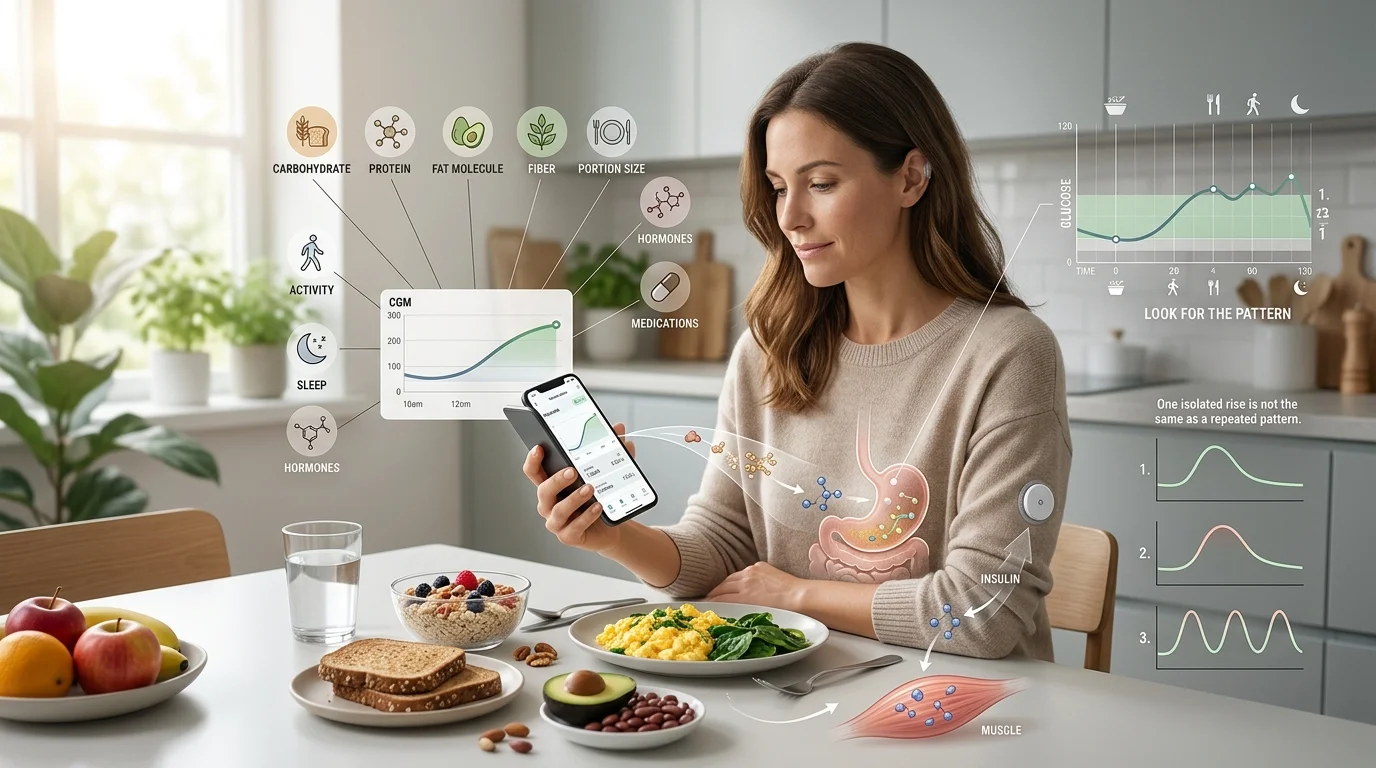
The same meal may also produce different responses depending on your activity, sleep, stress, hormones, medications, portion size, and what else you ate with it.
That means seeing your CGM line move upward is not, by itself, a reason to panic.
A CGM Shows a Response, Not a Food Rating
It can be tempting to look at your CGM and decide that any food that causes a rise must be unhealthy. But that is not how glucose monitoring should be interpreted.
Foods such as fruit, beans, oats, whole grains, and other carbohydrate-containing foods can raise blood glucose while still being part of a nutritious diet. What matters is the bigger picture rather than one reading.
Your CGM can help you notice patterns, but it should not turn every meal into a test you are afraid to fail.
Why Your Meal Combination Matters
The way you build a meal can affect how your glucose responds. Portion size, carbohydrates, protein, fat, fiber, and the overall combination of foods can all play a role.
For example, pairing a carbohydrate source with protein, healthy fats, or fiber may affect how quickly glucose rises compared with eating a large portion of carbohydrate by itself.
This does not mean you need to avoid carbohydrates. It means you can learn how different meal combinations work for your body.
Look at Your Overall Glucose Pattern
One higher reading is very different from a repeated pattern of glucose elevations.
Instead of focusing on one spike, pay attention to what happens over time. Does your glucose regularly rise very high after certain meals? How long does it take to come back down? Do you notice similar patterns across several days?
Looking at patterns can give you more useful information than reacting emotionally to every individual number.
Do Not Let Your CGM Make You Afraid of Food
This is where glucose tracking can sometimes become stressful. You see a rise, blame the meal, remove another food, and then start worrying about the next meal.
Over time, your diet can become smaller and more restrictive because you are trying to prevent every possible glucose rise.
Your goal should not be to create a diet where your glucose never moves. Your body is supposed to respond to food. The goal is to understand your patterns and make balanced choices that support your health.
Small Changes Can Help You Plan Meals Better
If you are noticing frequent post-meal rises, look at the meal as a whole. Consider the portion, the type and amount of carbohydrate, the other foods on your plate, how often you are eating that meal, and what your glucose does afterward.
Regular movement can also influence glucose levels. Even simple activity after eating may help some people manage post-meal glucose.
Most importantly, give yourself enough time to notice patterns rather than making a major change based on one CGM reading.
Your CGM Should Help You Understand Your Body
A CGM can be a useful tool for learning how your body responds to different meals and daily habits. But the number on the screen is information, not a judgment.
You do not need to fear every glucose spike or label yourself as having “failed” because your glucose went up after eating. Learn from the pattern, look at the bigger picture, and work with a qualified healthcare professional if you are seeing concerning or persistent glucose changes.
Building a healthier relationship with food means understanding your body without becoming afraid of it.
Medical Disclaimer
This article is for general health education and is not medical advice. CGM readings can vary and should be interpreted in the context of your overall health, medications, symptoms, and medical history. If you have diabetes, prediabetes, use glucose-lowering medication, or are concerned about your glucose readings, speak with your healthcare professional before making significant changes to your diet or treatment.
References
- American Diabetes Association. Standards of Care in Diabetes—2026. Diabetes Care. 2026.
- American Diabetes Association. Diabetes Technology: Standards of Care in Diabetes—2026. Diabetes Care. 2026.
- Centers for Disease Control and Prevention. About Diabetes.
- National Institute of Diabetes and Digestive and Kidney Diseases. Insulin Resistance & Prediabetes.
- National Institute of Diabetes and Digestive and Kidney Diseases. Continuous Glucose Monitoring.