Are Regular Periods a Sign Your PCOS Is Getting Better?

If your periods are becoming more regular, you might naturally think, “My PCOS must be getting better.”
But think about it for a moment. Is a regular period really enough to tell you what is happening with your PCOS?
Not always.
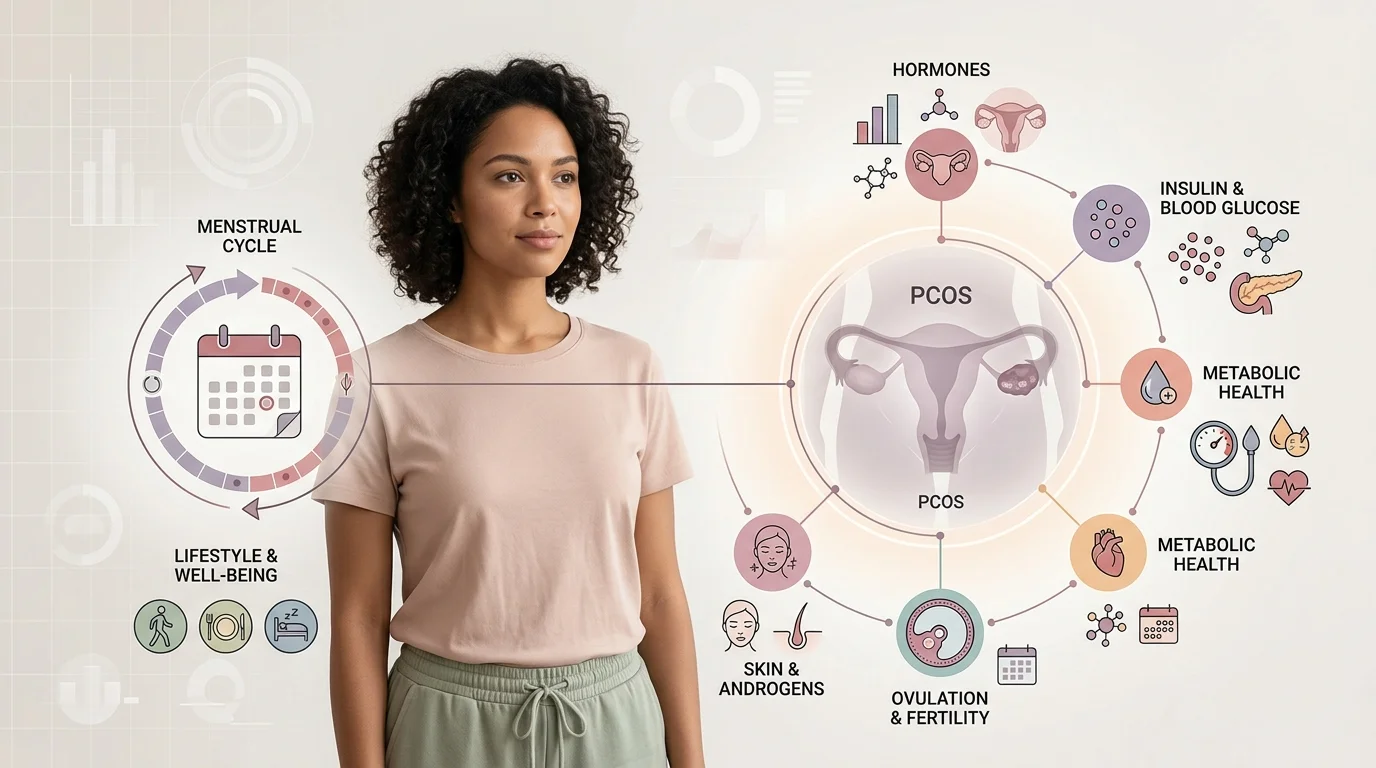
PCOS can look very different from one woman to another. Your period is one important part of the picture, but it is not the whole picture. Changes can also involve your hormones, blood sugar, insulin sensitivity, fertility, body composition, and long-term metabolic health.
Regular Periods Can Be a Positive Change
If your periods used to be very irregular and they are now coming more consistently, that is something worth noticing.
For some women, more regular cycles may reflect more regular ovulation. But having a period does not always confirm that ovulation happened, and a regular cycle does not automatically mean every aspect of PCOS is improving.
That is why it is important not to judge your entire health by what you see on a period tracker.
PCOS Is More Than Irregular Periods
Periods are one of the symptoms people often associate with PCOS, but the condition can affect much more than your menstrual cycle.
PCOS can involve higher androgen levels, problems with ovulation, difficulty with fertility, insulin resistance, and increased risks related to metabolic health. Not every woman will experience all of these issues, and symptoms can change over time.
You can have regular periods and still have PCOS.
What Is Happening With Your Blood Sugar?
This is one part of PCOS that you cannot see from your cycle.
Some women with PCOS have insulin resistance, meaning their bodies do not respond to insulin as effectively as they should. The body may produce more insulin to help keep blood glucose within a normal range.
You may not feel anything when this is happening.
Depending on your personal risk factors, your healthcare professional may recommend checking blood glucose and other metabolic markers. These results can provide information that a period tracker simply cannot.
Your Weight Does Not Tell the Whole Story Either
PCOS is not a condition that only affects women who are overweight.
Women of different body sizes can have PCOS, and changes in weight do not tell you everything about your metabolic health. Your blood pressure, cholesterol, glucose regulation, physical activity, nutrition, and other factors can all be relevant.
This is why chasing a certain number on the scale is not the same as taking care of your PCOS.
What About Your Hormones?
PCOS involves changes in hormone patterns, particularly those related to androgens and ovulation.
If symptoms such as acne, unwanted facial or body hair, scalp hair thinning, or other signs of higher androgen levels are continuing, having regular periods does not necessarily mean those concerns have disappeared.
Your healthcare professional can help determine whether these symptoms need further evaluation.
Fertility Can Tell You Something Too
For women who are trying to become pregnant, regular periods can be encouraging, but they do not always tell you whether you are ovulating consistently.
PCOS is one of the common causes of ovulatory problems and can affect fertility. If pregnancy is your goal, your healthcare professional can help determine whether ovulation is occurring and discuss appropriate options if needed.
Do Not Let One Improvement Define Your Whole Health

This is something I think women need to hear more often.
If one symptom improves, celebrate the progress. But do not assume that every other part of your health has automatically improved too.
Maybe your periods are regular now, but you are still dealing with fatigue, acne, unwanted hair growth, blood sugar concerns, or difficulty with fertility. Those things still deserve attention.
Your health is bigger than one symptom.
PCOS Management Is Not About Punishment
You do not need to punish your body with extreme diets or endless workouts because you have PCOS.
Healthy habits can support PCOS management, but what works best should be realistic for your life. Regular movement, balanced nutrition, adequate sleep, stress management, and appropriate medical care can all have a place in your overall plan.
The goal is not to make your body look a certain way. It is to support how your body functions.
Look at the Bigger Picture
If your periods are becoming regular, that can be one encouraging piece of information. But it is worth asking what else has changed.
How are your energy levels? Are your other symptoms improving? How are your blood sugar and cholesterol? Are you ovulating if fertility is a concern? Are you feeling better overall?
These questions give you a much fuller picture than your cycle alone.
Your Period Is One Piece of the Puzzle
PCOS is different for every woman, which is why there is no single sign that can tell you whether your condition is “better” or “worse.”
A regular period can be a good thing, but it is not the finish line.
The goal is not just to have a regular cycle. It is to support your health from the inside out.
Pay attention to the changes you can see, but also remember the things you cannot see. If you have PCOS, regular follow-up with a qualified healthcare professional can help you understand what is actually happening with your hormones and metabolic health.
Medical Disclaimer
This article is for general educational purposes and is not a substitute for medical advice, diagnosis, or treatment. PCOS affects each woman differently, and testing and treatment should be based on individual symptoms, health history, and needs. Speak with a qualified healthcare professional about your PCOS and any changes in your menstrual cycle or other symptoms.
References
- Teede HJ, et al. Recommendations from the 2023 International Evidence-based Guideline for the Assessment and Management of Polycystic Ovary Syndrome. Fertility and Sterility. 2023.
- Teede HJ, et al. International Evidence-based Guideline for the Assessment and Management of Polycystic Ovary Syndrome. Monash University. 2023.
- American College of Obstetricians and Gynecologists. Polycystic Ovary Syndrome (PCOS). ACOG.
- National Institute of Child Health and Human Development. Polycystic Ovary Syndrome (PCOS). National Institutes of Health.