
Can Diabetes Start Years Before Your Diagnosis?

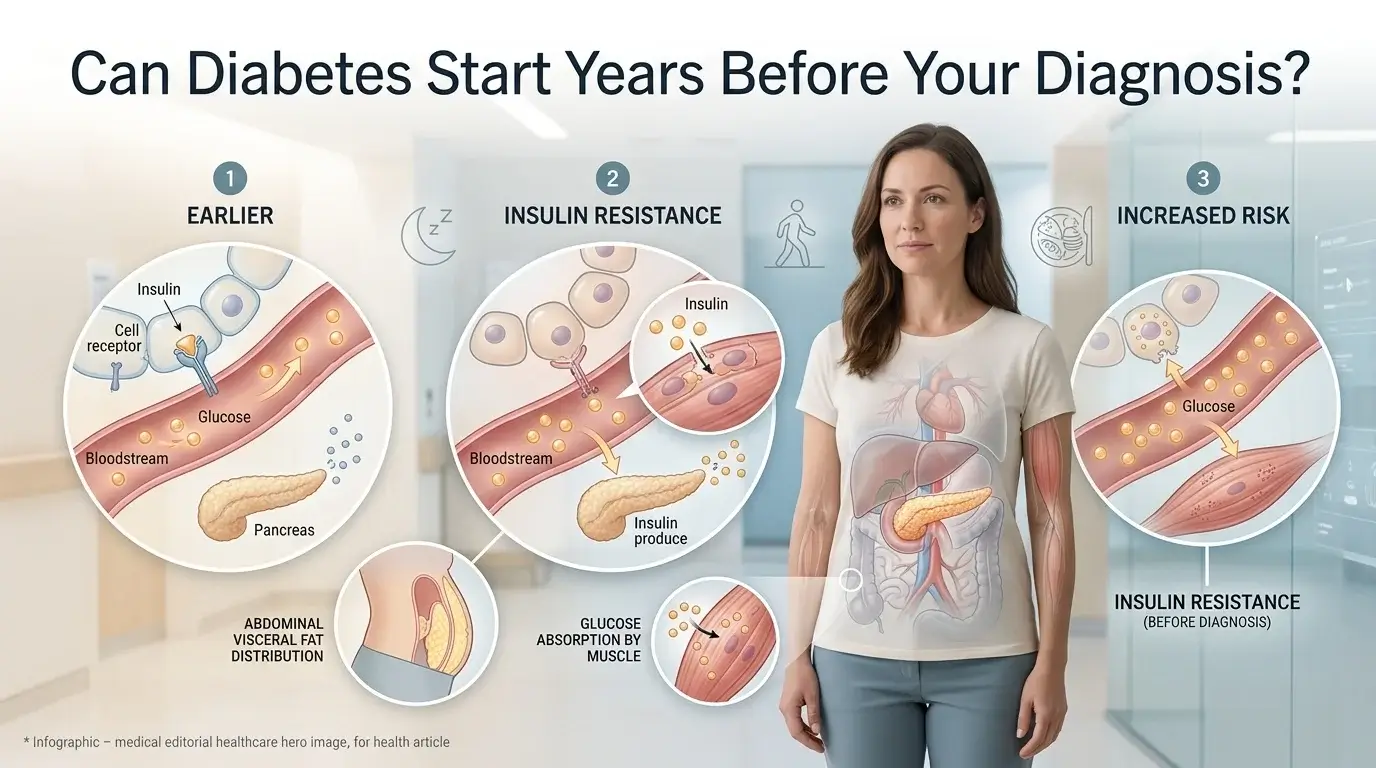
Most people think diabetes begins when their blood sugar finally becomes high enough to show up on a test.
But changes in the way your body responds to insulin can happen much earlier. Insulin resistance can develop gradually, sometimes before routine blood sugar tests reach the range used to diagnose diabetes.
That is why your metabolic health is worth paying attention to long before a diabetes diagnosis.
Insulin Resistance Can Develop Quietly
Insulin helps your body move glucose from your blood into your cells to be used for energy. When your cells become less responsive to insulin, your body may produce more insulin to keep blood glucose within a normal range.
For a while, blood sugar can still look normal even though the body is working harder to maintain it.
Over time, insulin resistance can become more significant and may contribute to prediabetes and eventually type 2 diabetes.
Your Waist Size Can Tell You Something
Where your body stores fat matters as well as how much body fat you have overall.
Excess fat around the abdomen, particularly visceral fat around internal organs, is associated with insulin resistance and a higher risk of metabolic problems.
This does not mean that everyone with a larger waist will develop diabetes. It is simply one factor that can be considered alongside your overall health.
Muscle Matters Too
Muscle plays an important role in glucose metabolism because it uses glucose for energy.
Regular physical activity, including resistance training and other forms of exercise, can support insulin sensitivity and help maintain muscle mass as you get older.
You do not need to become a fitness expert. Consistent movement can be a meaningful part of taking care of your metabolic health.
Poor Sleep Can Affect Metabolic Health
Sleep is not just about feeling rested the next morning.
Not getting enough quality sleep on a regular basis has been associated with poorer insulin sensitivity and a higher risk of metabolic problems. Stress can also affect sleep, eating habits, physical activity, and other behaviors that influence metabolic health.
Taking care of your sleep is another part of taking care of your body.
Normal Blood Sugar Does Not Mean Ignore Your Health
A normal blood glucose result is reassuring, but one test does not tell you everything about your long-term metabolic health.
Your healthcare professional may consider factors such as family history, weight and waist changes, blood pressure, cholesterol, blood glucose, and other risk factors when deciding whether further testing is appropriate.
If you have concerns about your risk of diabetes, ask what screening is appropriate for you rather than waiting for symptoms.
You Do Not Have to Wait Until 40 or 45
There is no specific age when diabetes suddenly “starts.” Type 2 diabetes develops through a combination of genetic, metabolic, and lifestyle factors, and the timeline is different for every person.
The point is not to become anxious about developing diabetes at a young age. It is to understand that healthy habits are worth building early.
Regular movement, balanced nutrition, adequate sleep, maintaining muscle, and avoiding smoking can all support better metabolic health.
The Bottom Line
You do not have to wait for a blood test to become abnormal before caring about your metabolic health.
The goal is not to fear diabetes. It is to understand your risk early and give your body the support it needs before problems become harder to manage.
If you have risk factors for type 2 diabetes or concerns about your blood sugar, talk with a qualified healthcare professional about which tests and screening schedule are appropriate for you.
Medical Disclaimer
This article is for general educational purposes and is not a substitute for medical advice, diagnosis, or treatment. Normal blood sugar does not guarantee that a person will never develop diabetes, and individual screening needs vary. Speak with a qualified healthcare professional about your personal risk factors and appropriate testing.
References
- American Diabetes Association. Standards of Care in Diabetes—2026. Diabetes Care. 2026.
- Centers for Disease Control and Prevention. National Diabetes Statistics Report. Centers for Disease Control and Prevention.
- National Institute of Diabetes and Digestive and Kidney Diseases. Insulin Resistance & Prediabetes. NIDDK.
- World Health Organization. Diabetes. World Health Organization.