
How Emotional Stress Can Affect Your Health and Behavior

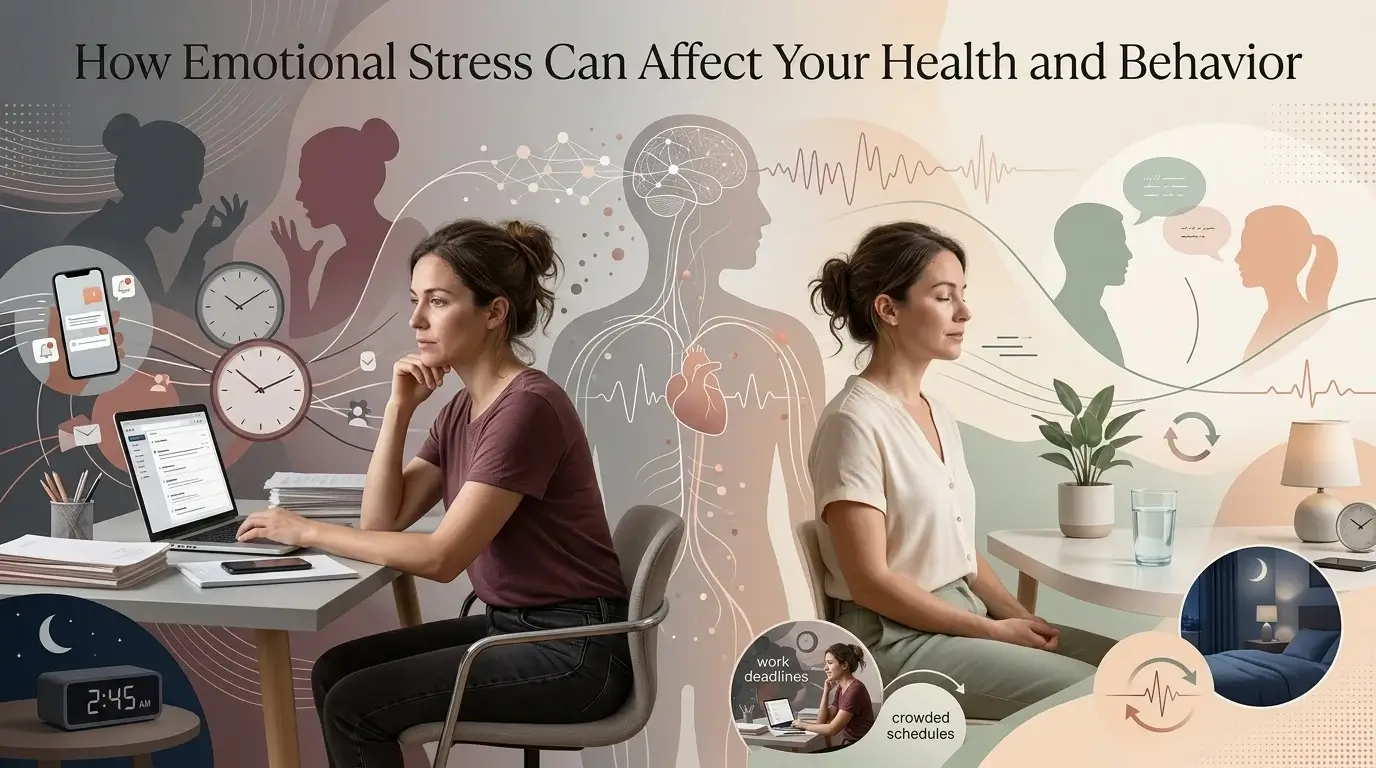
Sometimes the way we react to people is not just about the moment itself. Stress, emotional exhaustion, poor sleep, and feeling overwhelmed can all affect how we communicate, how quickly we become frustrated, and how we respond when something hurts us.
That does not mean every reaction is caused by stress, but understanding the connection between emotional health and behavior can help us respond to ourselves with more awareness.
When Stress Changes the Way You React
When you are under ongoing stress, small things can feel much bigger. You may become more irritable, defensive, emotional, or easily overwhelmed.
Your body and mind are connected, so emotional pressure can show up in the way you communicate and respond to situations. Sometimes the reaction feels stronger than you expected because you were already carrying a lot before that moment happened.
Your Reaction Still Matters
Understanding the reason behind a reaction does not mean every reaction is healthy.
You are still responsible for how you speak, what you say, and how you treat other people. If you shout, say something hurtful, or respond in a way you later regret, it is okay to acknowledge that and work on changing it.
Taking responsibility is part of emotional health.
But So Is Recognizing What Triggered You
At the same time, your reaction did not necessarily come from nowhere.
Maybe someone repeatedly ignored your boundaries. Maybe you have been dealing with the same stressful situation for months. Maybe you were already exhausted and emotionally drained.
Looking at what happened before your reaction can help you understand your triggers instead of simply labeling yourself as “too emotional” or “the problem.”
Stress Can Affect Everyday Behavior
Emotional stress can sometimes show up in ways we do not immediately connect to our mental well-being. You may withdraw from people, lose patience more easily, struggle to concentrate, have trouble sleeping, or feel constantly on edge.
These changes can affect relationships, work, eating habits, physical activity, and how you care for yourself.

If these changes continue for a long time or start interfering with your daily life, it may be worth talking with a healthcare professional or mental health professional.
Healthy Accountability Goes Both Ways
A healthy relationship should leave room for both people to take responsibility.
You can say, “I did not handle that well,” while also being able to say, “What happened before my reaction still hurt me.”
Both statements can be true.
Taking responsibility for your behavior does not require you to ignore another person’s behavior or pretend that your feelings have no reason behind them.
Give Yourself a Moment Before Responding
When emotions are high, taking a pause can help. Step away if you need to, take a few slow breaths, and give yourself time to understand what you are feeling before continuing the conversation.
You do not have to respond immediately to every difficult situation.
Sometimes the healthiest response is giving yourself enough space to respond rather than react.
The Bottom Line
Your emotions and behavior are connected to your overall well-being. Stress and emotional exhaustion can influence how you respond, but they do not remove your responsibility for your actions.
You can take responsibility for your reaction while still recognizing what affected you in the first place.
Understanding both sides can help you communicate more clearly, set healthier boundaries, and take better care of your emotional health.